
Cutting Board Care Instructions: Tips for Long-Lasting Use
Amazon affiliate links are included and I may receive commissions on products purchased through those links.
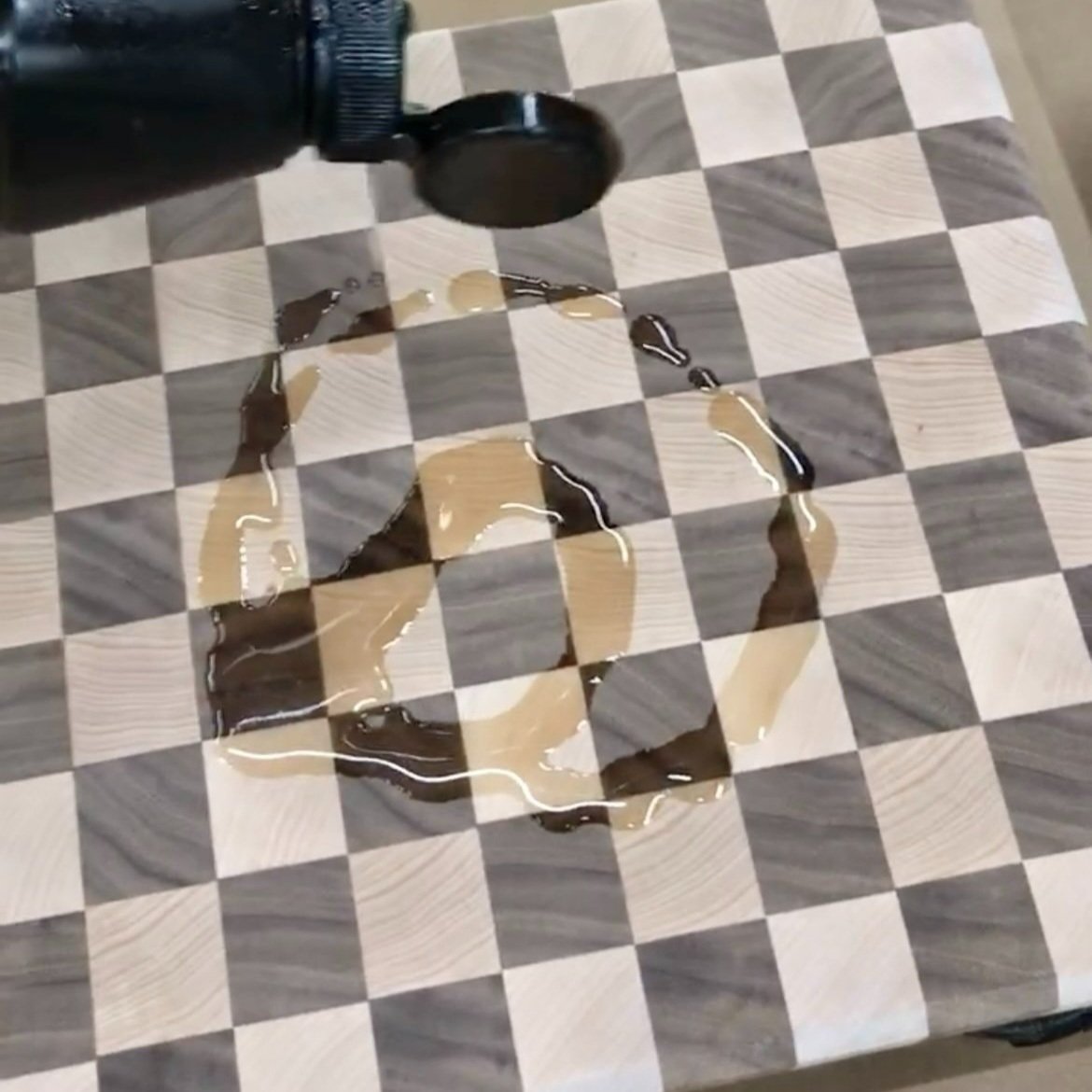
The Finish
My cutting boards are finished in two steps: a base coat of Bumblechute's Woodworker's Oil or Walrus Oil Cutting Board Oil depending on when your piece was made, followed by a wax conditioner topcoat for extra protection. Both oils are non-toxic and made for wood that contacts food. If you're curious about exactly what's in them and why I use what I use, I've got a full breakdown on my cutting board safety page.
For reapplication at home, two good options: Walrus Oil Cutting Board Oil or Bumblechute's Hydrating Wood Serum. Both are food-safe and well suited to maintaining a board, made with different base ingredients, so it really comes down to personal preference. Apply once the surface begins to lighten or takes on a dry, chalky look. The oil brings the color back and re-seals the surface. A board wax applied afterward will help extend the time between oiling applications and add some protection over the life of the board.
How to know it's time: next time you rinse the board, watch what the water does. On a well-oiled board, water beads up and runs off the surface. If it's soaking in instead of beading, that's your sign the wood needs oil. A hazy or dull look to the surface is another cue. That's usually the wood telling you it's dried out.
How to Clean
After each use, wash the whole board, both sides and the edges, not just the surface you cut on. Wipe it down with warm water and dry it with a towel. If it's still damp, stand it upright and let it air dry completely, but get as much water off as you can first. Washing only one side lets moisture soak in unevenly, which is one of the main causes of warping over time.
A small amount of mild dish soap and a sponge is fine to use. The idea that soap ruins a wood board is a myth. What actually causes damage is prolonged soaking, not soap contact. Just rinse well and dry promptly afterward.
NEVER put the board in the dishwasher or microwave. The heat and moisture will swell the wood fibers, and the board will crack or splinter.
NEVER let the board sit in water before cleaning.
NEVER let a wet board dry flat. The exposed side dries faster than the side against the counter, and that uneven drying is what causes warping. It needs to dry evenly.
Use Instructions
I make both long grain and end grain cutting boards, and it's worth knowing the difference, since it affects how your board handles a knife over time.
Long grain boards have the wood grain running side to side along the length of the board. End grain boards have the grain running perpendicular, standing up along the height of the board. Because a knife splits end grain fibers apart rather than slicing across them, end grain boards compress and close back up somewhat after a cut, which is why they tend to show fewer visible knife marks over time. Long grain boards will show marks a bit more readily, but they're just as functional and durable with the same basic care.
A third type, face grain, is what you'll find on my cheese slicers and charcuterie boards. It shows the broadest, most striking view of the wood grain, which is exactly why it's the right choice for a serving piece. It's not built the same way as my cutting boards, and it'll show knife marks more readily than either long grain or end grain. Light cutting on a charcuterie board is fine if that's how you use it, but if you want a dedicated everyday cutting surface, one of my long grain or end grain boards is the better tool for the job.
If you love the look of a charcuterie board too much to want knife marks on the front, a simple fix is to pick one side for cutting and keep the other for serving and display. That way the piece stays presentation-ready on one face no matter how the other gets used.
Whichever you have, avoid sawing motions with a knife and chop straight down instead. Both types can handle regular use, but consistent sawing will wear the surface faster and mean more frequent oiling.
With normal use and the care above, deep gashes are uncommon. If one does happen, a random orbit sander with progressive grits and a fresh coat of oil brings the board right back to like-new condition, so it's a fixable thing, not a reason to replace the board.
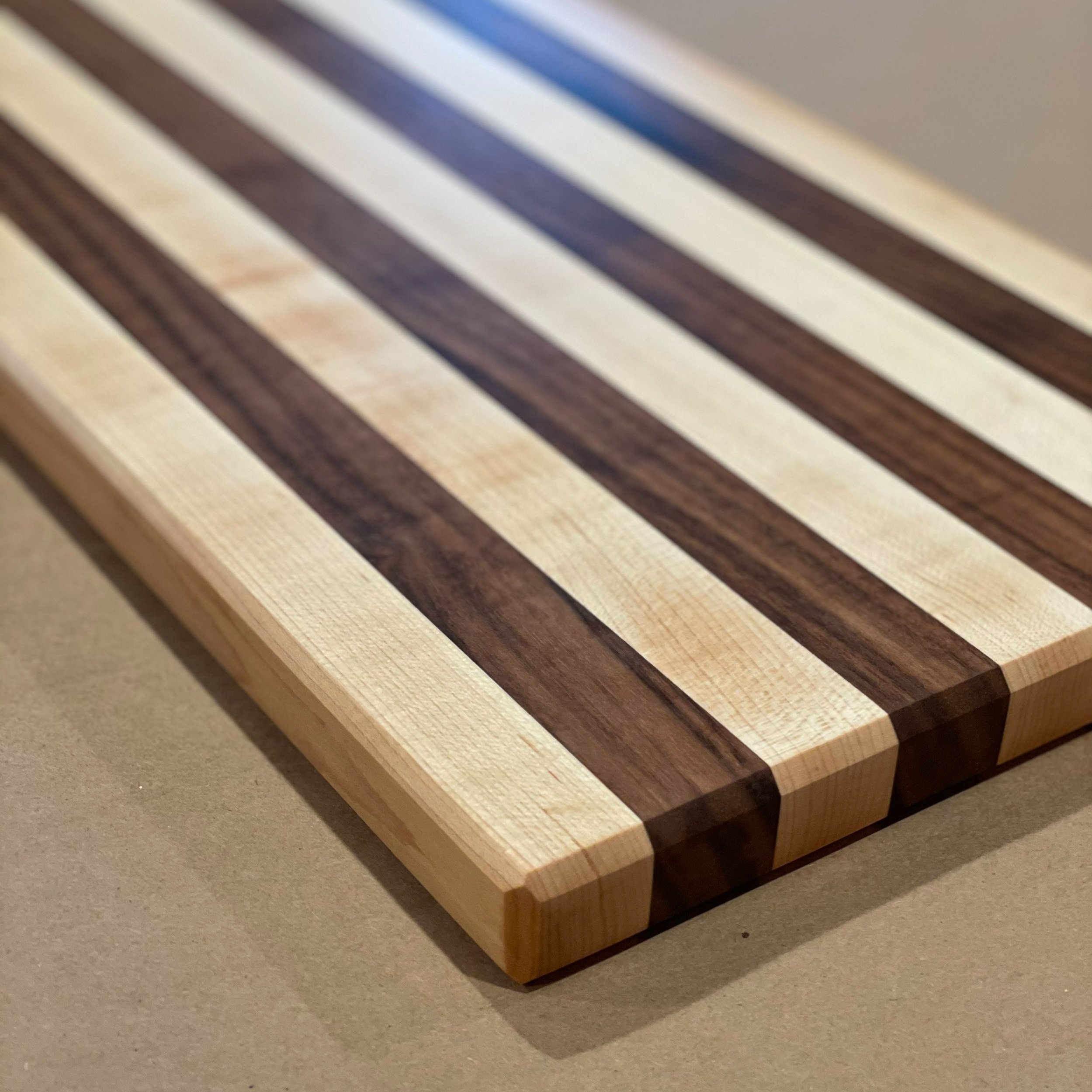
Long Grain
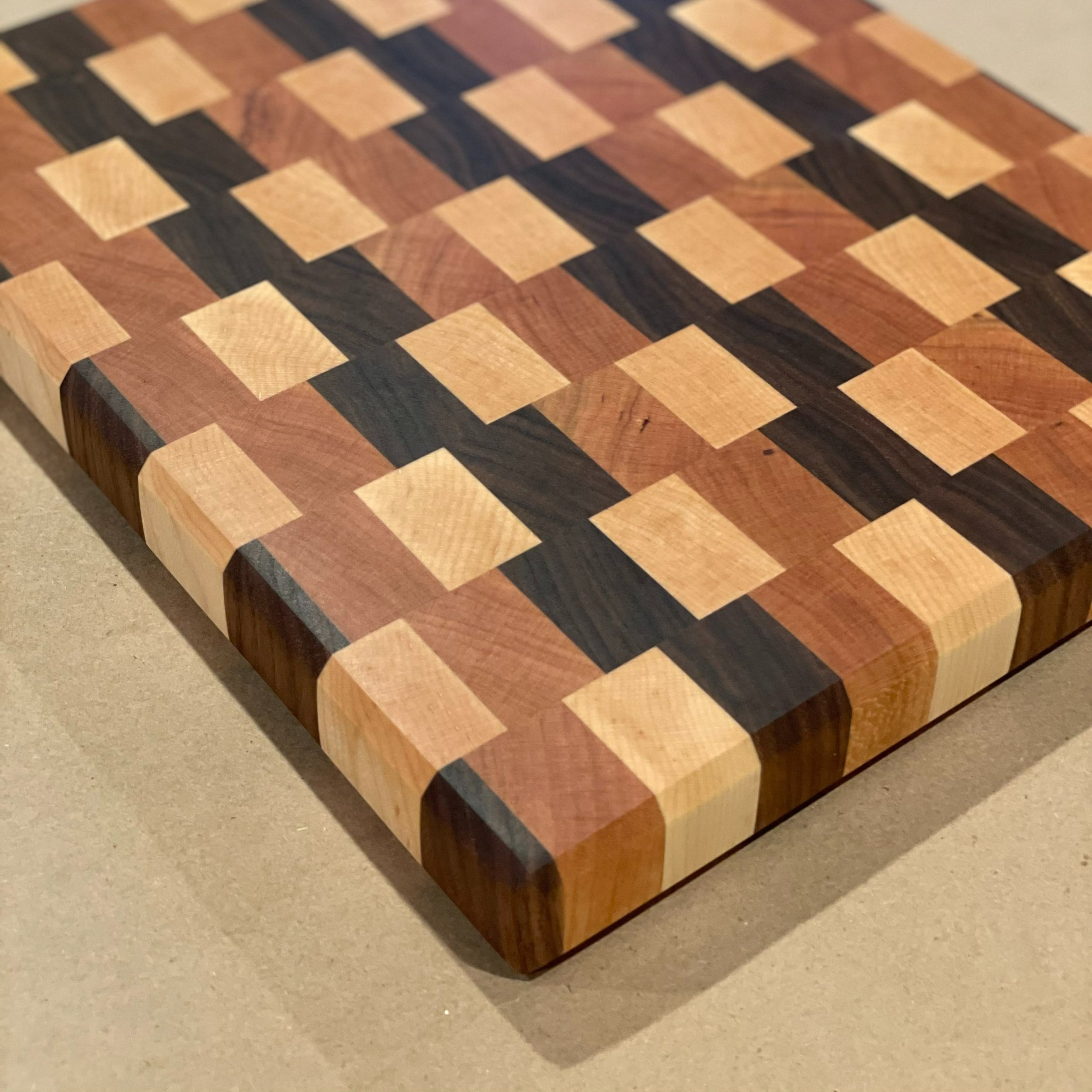
End Grain
The Application
These boards handle cheeses, vegetables, and meats without issue. For raw meats, wash the board immediately after use with hot, soapy water. I don't recommend cutting raw chicken on any wood board, mine included, since it carries a higher bacteria load than most other raw meats, and a wood surface is harder to fully sanitize than a nonporous one. If a board ever starts to smell after use, clean it with white vinegar, or rub it with half a lemon and coarse salt, let it sit a few minutes, then scrub clean with warm water.
Taken care of this way, a Fine Grainery cutting board will hold up in the kitchen for generations.
Interested in one for yourself? Check out the current lineup in my store.
Updated 7/9/2026


**This product is out of stock with no plans to remake this same triple checker style. We will be making small batch runs of other end grain designs in the future. The next end grain style is planned for early 2026! **
Welcome to the Triple Checker End Grain Cutting Board, the premium end grain cutting board for the culinary enthusiast. Made from the finest walnut, cherry, and hard maple woods, our cutting board is the perfect blend of beauty and functionality.
End grain cutting boards are known for their durability and self-healing properties, making them a top choice for professional chefs and home cooks alike. The wood fibers on the surface of the board have been cut at a 90-degree angle, allowing them to stand up to the rigors of chopping and slicing without showing knife marks.
But Triple Checker isn't just any end grain cutting board. The combination of walnut, cherry, and hard maple creates a stunning visual display that is sure to be a conversation piece in any kitchen. The rich, warm tones of the walnut and cherry are complemented by the lighter, brighter maple, creating a striking contrast that is sure to impress.
In addition to its aesthetic appeal, Triple Checker is also built to last. The board is crafted with care and attention to detail, ensuring that it will stand up to years of use in the busiest of kitchens. The edges of the board are also finished with a smooth, chamfered edge for added comfort and safety.
So why wait? Upgrade your cutting board game today with Triple Checker. Your kitchen (and your knives) will thank you.
These are roughly 12”x12”x1”, and will vary slightly in size and coloration. The board is considered reversible as both sides can be used. If rubber feet are preferred, they can be added. It has been finished with a FDA food safe finish that will need some maintenance depending on how frequently it’s used. See blog post on cutting board care instructions.